
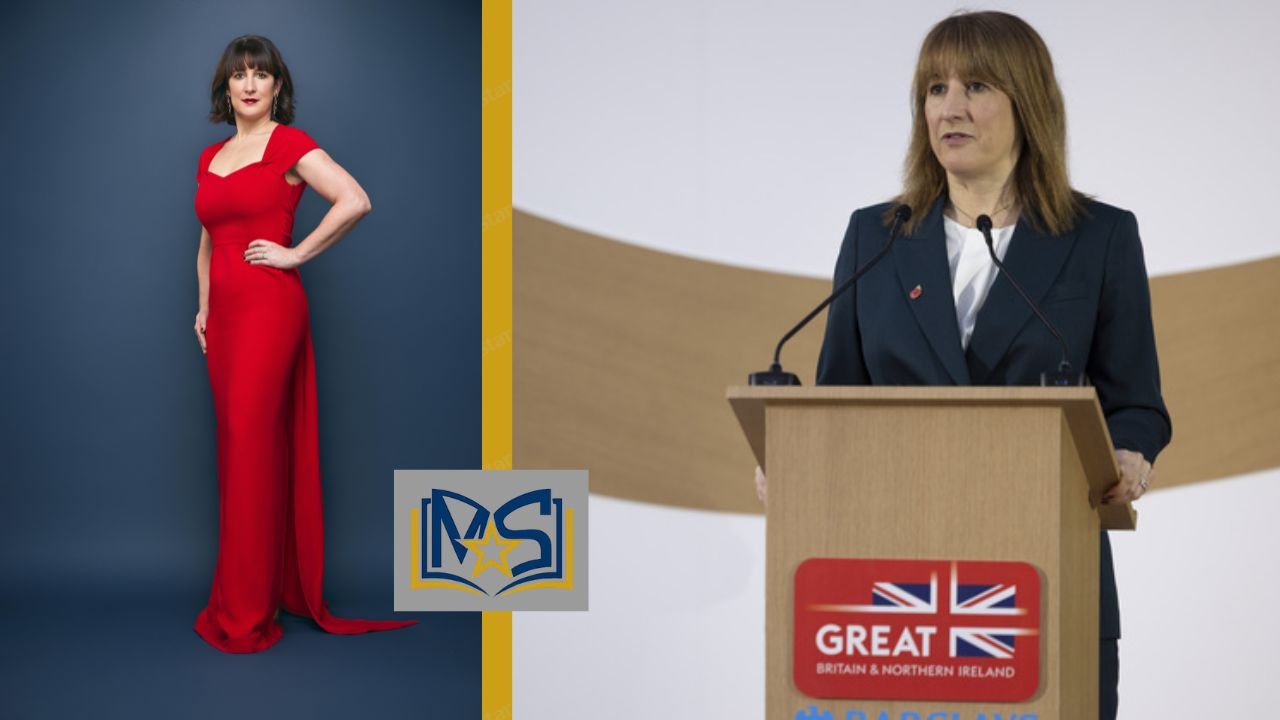
Rachel Reeves is one of the most closely watched figures in British politics because her office reaches directly into household finances. As Chancellor of the Exchequer since 5 July 2024, she is the minister most associated with budgets, tax choices, borrowing, growth forecasts and the wider direction of the UK economy. She has also been an MP continuously since 6 May 2010, which means she is not a newcomer to Westminster but a long-established Labour politician whose profile has risen with her responsibilities.
That public prominence explains why people search not only for who is Rachel Reeves, but also for more personal queries such as Rachel Reeves net worth, Rachel Reeves age, is Rachel Reeves married, Rachel Reeves children, Rachel Reeves disability, Rachel Reeves council tax, and is Rachel Reeves a millionaire. Some of those questions can be answered directly from the public record. Others cannot be answered with certainty because the British disclosure system is designed to show relevant interests and accountability, not to publish a politician’s full balance sheet or every private family detail.
In simple terms, Rachel Reeves is a senior Labour politician, the UK’s first female Chancellor, a married mother of two, and a public figure whose economic decisions are far more visible than her personal life. That contrast is exactly why she attracts both political scrutiny and private curiosity.
Quick answer: who is Rachel Reeves?
Rachel Reeves is a Labour politician who serves as the UK’s Chancellor of the Exchequer. She took office on 5 July 2024 and has served in Parliament since 2010. Public profiles also identify her as married to Nicholas Joicey and as a mother of two children.
Latest Coverage on Rachel Reeves
The latest coverage gives this article a clear current-news angle. On 3 March 2026, Reuters reported that Reeves delivered a budget update shaped by fresh Office for Budget Responsibility forecasts and wider instability linked to conflict in the Middle East and rising energy prices. In that statement, she argued that the government would keep prioritising economic stability, infrastructure investment and reform despite a tougher backdrop.
Reuters also reported that the updated forecasts now put UK GDP growth at 1.1% in 2026, with growth then expected to improve to 1.6% in 2027 and 2028 before settling at 1.5% in 2029 and 2030. Unemployment is expected to peak later in 2026 and then fall through the rest of the parliamentary term. Those numbers matter because they turn Rachel Reeves from a biography subject into the central face of a live argument about whether Labour’s economic plan is actually delivering.
Another headline figure from the same day was fiscal headroom. Reuters said Reeves told Parliament that Britain’s fiscal headroom had risen to £23.6 billion for 2029/30, up from nearly £22 billion projected in the previous full budget update. Even so, Reuters noted that those projections were made before a more recent jump in borrowing costs and energy-price pressure, which helps explain why coverage of Reeves often shifts between reassurance and vulnerability.
Quick Bio of Rachel Reeves
| Field | Verified public information |
|---|---|
| Full name | Rachel Jane Reeves |
| Current role | Chancellor of the Exchequer since 5 July 2024 |
| Party | Labour Party |
| MP since | 6 May 2010 |
| Constituency | Leeds West and Pudsey |
| Rachel Reeves age | Born 13 February 1979 |
| Relationship status | Married to Nicholas Joicey |
| Rachel Reeves children | Two children |
| Salary anchor | MP basic salary: £93,904 from April 2025; £98,599 for 2026–27 |
| Net worth | No official public net worth figure is published in parliamentary disclosures |
| Finance disclosures | Interests are disclosed in the official Register of Interests, but that is not a complete asset statement |
Who is Rachel Reeves?
Rachel Reeves is a British politician whose significance comes from both office and timing. As Chancellor, she is the minister most closely linked to budgets, tax rises or cuts, public borrowing, and the credibility of the government’s economic story. Her political importance is therefore structural, not celebrity-based. People search for her because they want to understand the person now associated with Treasury choices that affect wages, mortgages, welfare, public services and business confidence.
That is also why searches about her personal life have grown. When someone becomes Chancellor, the public starts asking questions that mix biography with financial curiosity: how old is she, is she married, does she have children, what is her net worth, is she a millionaire? The tricky part is that the official record answers only some of those questions directly. The rest need careful handling, because speculation about private wealth or personal circumstances can quickly outrun what the evidence actually supports.
Rachel Reeves age and early background
For readers searching Rachel Reeves age, the answer is straightforward: she was born on 13 February 1979. Public reference profiles also identify her birth name as Rachel Jane Reeves and place her birth in Lewisham, London.
Her background matters because Reeves has often been presented not simply as a partisan figure but as someone with an economics-facing professional profile. Public biographies note her education and earlier work before reaching the Treasury, which helps explain why Labour positioned her as the party’s main economic voice long before entering government. That background does not settle whether her policies succeed, but it does explain why she is framed publicly as a serious institutional figure rather than a symbolic appointment.
Is Rachel Reeves married?
Yes, Rachel Reeves is married. Public profiles identify her husband as Nicholas Joicey, a senior civil servant.
There is a useful distinction here. “Is Rachel Reeves married?” is a factual, answerable question. The wider curiosity about her marriage is mostly a by-product of her office. Because the Chancellor is trusted with the public finances, audiences often look for signals of stability, seriousness and domestic rootedness in the private life of the person holding the job. But the public record goes only so far, and it should. The existence of a marriage is public fact; the inner life of that relationship is not public property.
Rachel Reeves children and family life
For people searching Rachel Reeves children, public profiles state that she has two children.
That may look like a small detail, but it shapes how her public image is read. Modern British politics still places heavy symbolic weight on family life, especially when a politician is making arguments about household budgets, childcare costs, living standards, tax burdens and welfare. At the same time, Reeves has not turned her family into a public brand. That restraint is part of the story. It suggests a fairly conventional Westminster boundary: enough openness for public understanding, but not enough exposure to turn children or domestic life into campaign material. (Financial Times)
Rachel Reeves council tax and what the debate really means
Searches for Rachel Reeves council tax usually reflect political confusion more than one single personal position. Council tax is locally levied, but it becomes a national argument whenever Treasury policy, local government funding and household bills collide. That means Reeves’ name is attached to the debate even when the issue is structurally broader than one minister. This is why coverage often talks about tax-system pressure, reform options and the politics of local bills rather than a simple personal yes-or-no stance.
The cleanest fact-based way to write this section is to say that council tax sits inside the larger fiscal debate Reeves now leads. If she becomes associated with reform, that is because the Chancellor is central to how the state balances revenue, fairness and political risk. What readers should avoid is assuming that “Rachel Reeves council tax” means a single direct lever she alone pulls. In British politics, it is more complicated than that.
Rachel Reeves disability and the difference between personal claims and disability policy
The keyword Rachel Reeves disability needs especially careful treatment. There is no confirmed primary public record in the sources reviewed here that states Reeves herself has a disability. It would be wrong to infer or invent one.
What is public, however, is the political debate around disability and welfare policy attached to Treasury choices. Reuters reported in March 2025 that the government announced plans to cut more than £5 billion from welfare spending by 2029/30, with changes affecting people with illnesses and disabilities. Another Reuters report said official estimates suggested those welfare cuts could push 250,000 people, including 50,000 children, into relative poverty by 2030. So when people search “Rachel Reeves disability,” the accurate journalistic move is to distinguish between unverified personal-status claims and the very real public controversy over disability-related benefits policy.
Rachel Reeves net worth
The most honest answer to Rachel Reeves net worth is also the clearest one: there is no single official public figure confirming Rachel Reeves’ net worth. Parliamentary disclosure rules require MPs and ministers to register relevant interests, gifts, earnings and potential conflicts, but they do not publish a complete assets-minus-liabilities statement. That means online net-worth numbers are usually estimates, not verified public facts.
What can be stated with evidence is more limited but still useful. Reeves’ official parliamentary profile confirms her status as an MP and Chancellor, while public pay systems establish the baseline salary attached to parliamentary office. Those figures offer context for readers interested in finance, salary and public-sector income, but they do not prove private wealth. Income is not the same thing as net worth, and neither salary nor office allows a journalist to declare someone a millionaire without evidence of assets and liabilities.
Rachel Reeves net worth table
| Measure | What can be verified |
|---|---|
| Official net worth figure | None publicly published in parliamentary disclosures |
| Official interests register | Yes, but it is not a full wealth statement |
| MP salary baseline | Publicly set and published through official systems |
| Chancellor role | Public office confirmed by GOV.UK and Parliament |
Rachel Reeves net worth salary snapshot
- MP salary from April 2025: £93,904
- MP salary for 2026–27: £98,599
These figures are useful finance context, but they are not a net-worth calculation.
Is Rachel Reeves a millionaire?
The answer to is Rachel Reeves a millionaire is: it cannot be verified from the official public record currently cited here. That is not evasive; it is simply the evidential limit. To prove millionaire status, you would need reliable evidence of total assets such as property equity, investments, savings and other holdings, minus liabilities such as mortgages or loans. The public parliamentary system does not provide that kind of full balance sheet.
This matters because “millionaire” has become a cultural shortcut rather than a properly documented category. In political coverage, it is often used as a way of asking whether a minister is financially comfortable or socially distant from ordinary voters. But a responsible biography should not substitute mood for proof. On the available evidence, the correct line is that Rachel Reeves’ wealth is not officially confirmed in net-worth terms.
The power of privacy: influence without overexposure
One of the most interesting things about Reeves is how ordinary her privacy boundary looks compared with the intensity of attention on her office. The public knows the broad essentials: job, constituency, marriage, children, official role and political history. But there is no deliberate over-sharing of family identity, no constant conversion of private life into content, and no obvious attempt to soften hard economic politics with personal-brand intimacy.
That restraint tells its own story. In Reeves’ case, influence comes from office and policy rather than publicity. The more pressure builds around forecasts, taxes and spending, the more important that distinction becomes. It keeps the biography grounded in public function rather than gossip.
Public curiosity and misconceptions about Rachel Reeves
Most misconceptions around Rachel Reeves come from the collision between search culture and incomplete disclosure. A user types “Rachel Reeves net worth” and expects a precise number. They search “Rachel Reeves disability” and may be shown commentary about disability benefits rather than verified personal information. They search “Rachel Reeves council tax” and see a national tax argument compressed into a name-led keyword. The problem is not curiosity itself. The problem is that search phrasing often implies a certainty the evidence does not actually provide.
That is why fact-first writing matters here. The safest framework is simple: use official biographies for office and career, use Parliament for disclosures, and use reputable reporting for current policy controversies. Anything beyond that should be clearly marked as estimate, interpretation or unverified claim.
Legacy and future
Rachel Reeves’ long-term legacy will not be decided by curiosity about her private finances. It will be decided by whether the economic record under her watch looks durable, fair and politically defensible. The latest March 2026 coverage already shows the test clearly: weaker near-term growth, a contested but improved fiscal headroom figure, and an ongoing argument over whether stability is being bought at too high a social or political price.
That is why she remains such a compelling subject. Rachel Reeves is both a biography figure and a live political story. People search for her age, family and net worth because power always attracts personal curiosity. But the more important question is whether the Chancellor can translate fiscal discipline into a version of economic success voters can actually feel. As of 3 March 2026, that argument is still unfolding.
FAQs About Rachel Reeves
Who is Rachel Reeves?
Rachel Reeves is a Labour politician who has served as Chancellor of the Exchequer since 5 July 2024 and as an MP since 6 May 2010. (GOV.UK)
Rachel Reeves age: how old is she?
She was born on 13 February 1979. (Wikipedia)
Is Rachel Reeves married?
Yes. Public profiles identify her husband as Nicholas Joicey.
Rachel Reeves children: does she have kids?
Yes. Public sources report that Rachel Reeves has two children.
Rachel Reeves net worth: what is it?
There is no single official public figure confirming Rachel Reeves’ net worth in parliamentary disclosures.
Is Rachel Reeves a millionaire?
That cannot be verified from the official public record cited here because the UK register does not publish a full personal balance sheet. (UK Parliament)
Rachel Reeves disability: does she have a disability?
There is no confirmed primary public record in the sources reviewed here stating that she does. Most current reporting uses the term in connection with disability benefits policy, not her personal medical status.
Rachel Reeves council tax: what does the keyword usually refer to?
Usually it refers to the wider political debate about tax reform, local bills and Treasury policy rather than a simple personal stance that can be reduced to one line. (Reuters)