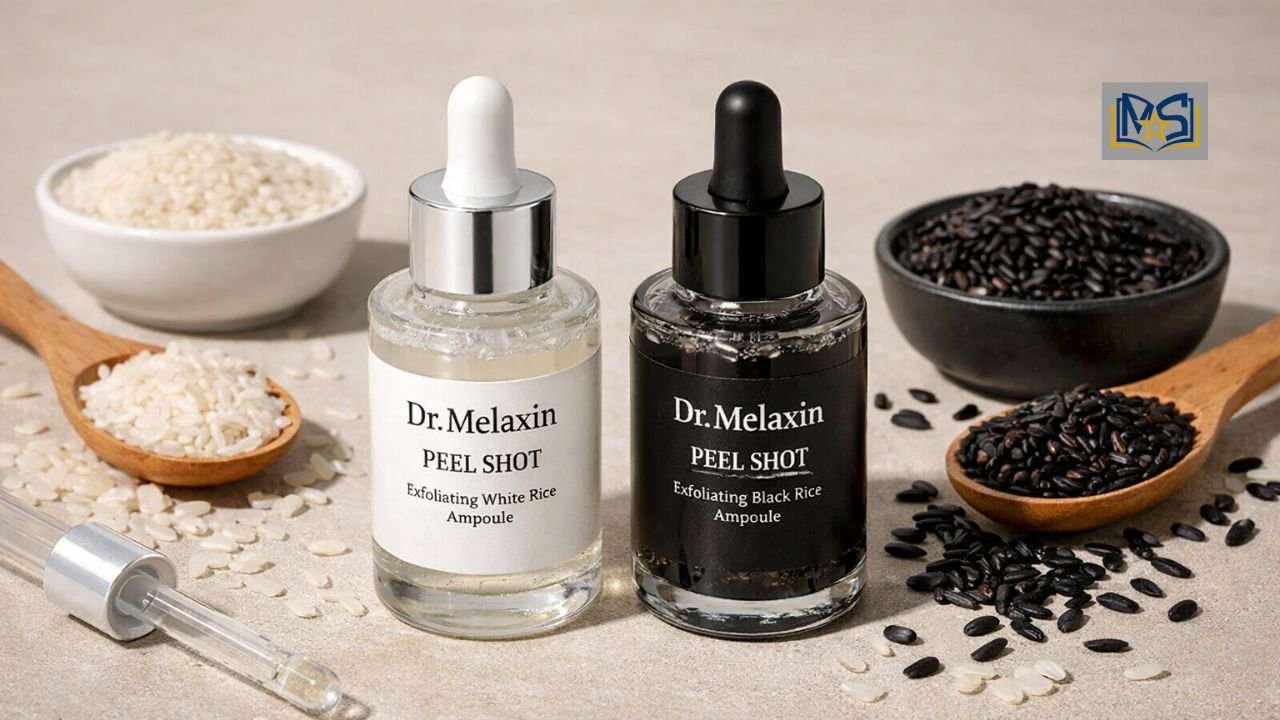
Dr. Melaxin Peel Shot is an exfoliating ampoule designed to help remove dead skin buildup, improve the look of texture, and make skin appear smoother and brighter. Most people do best using it 1–3 times per week (not daily), keeping the routine simple (cleanser → Peel Shot → moisturizer), and wearing sunscreen the next day to protect newly-exfoliated skin.
1) What is Dr. Melaxin Peel Shot?
Dr. Melaxin Peel Shot is typically described as an exfoliating “ampoule” (a serum-like product). The main purpose of exfoliation is to remove dead skin cells that can make skin look dull, feel rough, or appear uneven. When exfoliation is done correctly, many people notice:
- A smoother feel
- Improved visible texture
- More even-looking tone (appearance, not a medical claim)
- Makeup sitting better on the skin
Snippet-ready definition:
Dr. Melaxin Peel Shot is an exfoliating ampoule that helps lift dead skin to improve the look of smoothness, texture, and glow.
For a deeper look at the product, check out this Prostavive Colibrim supplement review covering its formula, pros, and potential results.
2) Does Dr. Melaxin Peel Shot actually work?
For many users, exfoliating ampoules can “work” in the sense that they often improve how skin feels (smoother) and how it looks (more polished). But results depend on:
- Your skin type (oily vs dry vs sensitive)
- How often you use it
- Whether you avoid mixing too many actives
- Whether you support your barrier with moisturizer
- Whether you wear sunscreen consistently
Realistic results timeline
This is a reasonable expectation for many people (not a guarantee):
- After 1–3 uses: smoother feel, less roughness, better makeup application
- After 2–4 weeks: more noticeable texture refinement (with consistent use)
- Longer term: congested areas may look less obvious if you don’t irritate your barrier
Reality check: Overuse can backfire. If skin becomes irritated, you may get dryness, redness, sensitivity, or “random breakouts” that are actually barrier stress.
3) How to use Dr. Melaxin Peel Shot (Step-by-step)
Best practice: Apply on clean, dry skin, then follow with moisturizer. Keep the rest of the routine minimal on Peel Shot nights.
Step-by-step routine
- Cleanse: Use a gentle face wash. Pat skin dry.
- Patch test (recommended): If you’re new to exfoliants, test behind the ear or jawline first.
- Apply a thin layer: Use a small amount and spread evenly.
- Avoid sensitive zones: Keep away from eyes, lips, corners of nose, and broken skin.
- Moisturize: Use a simple, fragrance-light moisturizer to support barrier comfort.
- Next day sunscreen: This matters a lot after exfoliation.
What NOT to combine on the same night (especially beginners)
To reduce irritation risk, avoid stacking:
- Strong AHA/BHA exfoliants (acid layering)
- Retinoids/retinol (if you’re not experienced)
- Harsh physical scrubs
- Multiple “peeling” products in one routine
If you feel irritation
If you experience burning (not mild tingling), tightness that doesn’t improve, or persistent redness:
- Stop for several days
- Focus on hydration + barrier support
- Restart at a lower frequency (or discontinue if it keeps happening)
4) How often should you use it?
Most people do best with 1–3 times per week, not daily. Start slow and adjust only if your skin stays comfortable.
Frequency guide (simple)
- Beginner / sensitive skin: 1x per week
- Normal / combination skin: 2x per week
- Oily / very tolerant skin: up to 3x per week (only if no irritation)
Tip: If your moisturizer stings when you apply it, that’s often a sign you’re over-exfoliating. Reduce frequency and simplify your routine.
5) Black vs White: Which Dr. Melaxin Peel Shot is best?
Many people search “Black vs White” because the variants are positioned for different concerns. While exact positioning can vary by market/listing, a useful way to decide is by your main concern.
Quick pick (Featured Snippet-ready)
- Pick Black Rice if your main issue is visible pores, oily skin, or blackhead-prone areas.
- Pick White Rice if your main issue is rough texture, dullness, or uneven feel.
Side-by-side comparison
Black Rice (generally chosen for):
- Oily T-zone support
- Pores that look more visible
- Blackhead-prone areas (nose/chin)
White Rice (generally chosen for):
- Rough texture / bumpy feel
- Dullness
- A smoother “finish” and glow look
Mini “Which one should I buy?” quiz
Choose Black Rice if you say YES to 2+:
- My T-zone gets oily fast
- I see blackheads around my nose/chin
- Pores look obvious in bright light/photos
- I clog easily with heavy skincare
Choose White Rice if you say YES to 2+:
- My skin looks dull even after cleansing
- Foundation catches on texture
- I have small bumps/rough patches
- I want a smoother, more even finish
6) Ingredients: what to look for (simple breakdown)
Exact formulas can vary by variant and region, so always check the product box/listing for the most accurate ingredient list. That said, exfoliating ampoules often include ingredients in these categories:
- AHA (Alpha Hydroxy Acids): Surface-level smoothing and texture refinement
- BHA (Beta Hydroxy Acids): Often used for oily/congested areas (pore-focused routines)
- PHA (Polyhydroxy Acids): Typically considered gentler exfoliation support
- Soothing/barrier helpers (if included): Ingredients like panthenol, centella-type extracts, allantoin, etc., can help reduce dryness feel
How to read ingredients fast:
If you’re sensitive, prioritize gentle routines and look for soothing/barrier support alongside exfoliation—then start with low frequency.
7) Side effects, safety, and who should avoid it
Exfoliating products can be safe when used correctly, but irritation is possible—especially if you mix too many actives or use it too often.
Possible side effects
- Mild tingling (can happen with exfoliants)
- Dryness or tightness
- Temporary redness
Stop and reassess if you feel
- Strong burning (not mild tingling)
- Swelling, hives, or severe irritation
- Excessive peeling/flaking that doesn’t improve with moisturizer
Extra caution if you are
- Very sensitive/eczema-prone or rosacea-prone
- Recovering from a professional peel/laser
- Already using prescription acne products or multiple strong actives
Safety rule that helps most people:
On Peel Shot nights, keep your routine minimal: cleanser → Peel Shot → moisturizer. Avoid “active stacking.” Wear sunscreen the next day.
8) Reviews: pros, cons, and realistic expectations
Search results show heavy “reviews” intent for this product. Here’s a balanced way to think about reviews (without hype):
Pros (common types of feedback)
- Skin feels smoother quickly
- Texture looks more refined with consistent use
- “Glow” effect when paired with hydration + sunscreen
- Makeup can sit more evenly
Cons (common types of complaints)
- Overuse can cause dryness/irritation
- Some people expect instant dramatic “before/after”
- Sensitive skin may react to exfoliating ingredients
- If used alongside other actives, irritation risk rises
Is it worth it?
It can be worth trying if:
- Your routine can support exfoliation (moisturizer + sunscreen)
- You’re willing to start slowly (1x/week)
- You avoid stacking it with other strong actives at first
If your barrier is already stressed (stinging, persistent dryness, redness), you may be better off stabilizing your skin first before adding exfoliation.
9) Where to Buy + How to Avoid Fakes (Legit Checklist)
If you’re shopping for popular skincare online, counterfeit risk can exist—especially through unknown sellers. To reduce the risk of fake products, it’s always better to purchase from trusted platforms with verified sellers.
Where to Buy (Best Practice)
- Official brand store (when available)
- Established retailers or marketplaces with clear return policies
- Sellers with long history and consistent reviews
For convenience, you can check the latest price and availability here:
👉 Check the latest Dr Melaxin Peel Shot price and reviews on Amazon
“Legit Check” Checklist (Quick)
Before purchasing, check the following details to make sure the product is authentic:
- Sealed packaging with visible batch and expiry details
- Clear product images matching the official packaging style
- Seller rating with a reasonable number of customer reviews
- A visible and realistic return/refund policy
- The price isn’t unusually low or “too good to be true”
Buying Recommendations (Simple)
Best first purchase:
Buy one variant that matches your main concern.
- Black Rice: better suited for pores and blackhead-prone skin
- White Rice: better suited for dull or rough skin texture
If you have sensitive skin:
Avoid buying bundles at first. Start by using the product once per week and monitor how your skin reacts.
If you’re experienced with exfoliation:
You may increase use to 2–3 times per week, but make sure to include barrier-friendly nights in your routine to prevent irritation.
You can also see the latest customer ratings and current deals here:
👉 See real customer reviews and today’s deal for Dr Melaxin Peel Shot
10) FAQs (People Also Ask style)
Can I use Dr. Melaxin Peel Shot every day?
Usually no. Daily use increases the risk of over-exfoliation and irritation. Most people do better with 1–3 times per week.
How often should I use it if I’m a beginner?
Start with once per week for 2–3 weeks. If your skin stays comfortable, move to twice per week.
What’s the difference between Black Rice and White Rice?
In general positioning:
- Black Rice is often chosen for pores/oily/blackhead-prone concerns.
- White Rice is often chosen for rough texture, dullness, and smoothing.
Does it work for blackheads?
It may help improve the look of congested areas over time if you use it consistently and don’t overdo exfoliation. Pair it with gentle cleansing and moisturizer.
Do I need moisturizer after using it?
Yes. Moisturizer helps support the skin barrier after exfoliation and reduces dryness.
Is Dr. Melaxin Peel Shot safe for sensitive skin?
It can be, but sensitive skin should patch test first, use it less frequently (1x/week), and avoid combining with other strong actives.