
Standfirst:
Most of the United States will spring forward at 2 a.m. on Sunday, March 8, 2026, with clocks moving straight to 3 a.m. The switch brings brighter evenings, but it can also disrupt sleep, delay morning light and leave people feeling off-balance for days.
Millions of Americans are about to lose an hour of sleep — and for many, the effect will feel bigger than a simple clock change. Daylight Saving Time returns across most of the U.S. this weekend, reviving a debate that comes back every spring: why does a shift meant to make better use of daylight still leave so many people feeling worse?
The clock changes fast — but the body does not
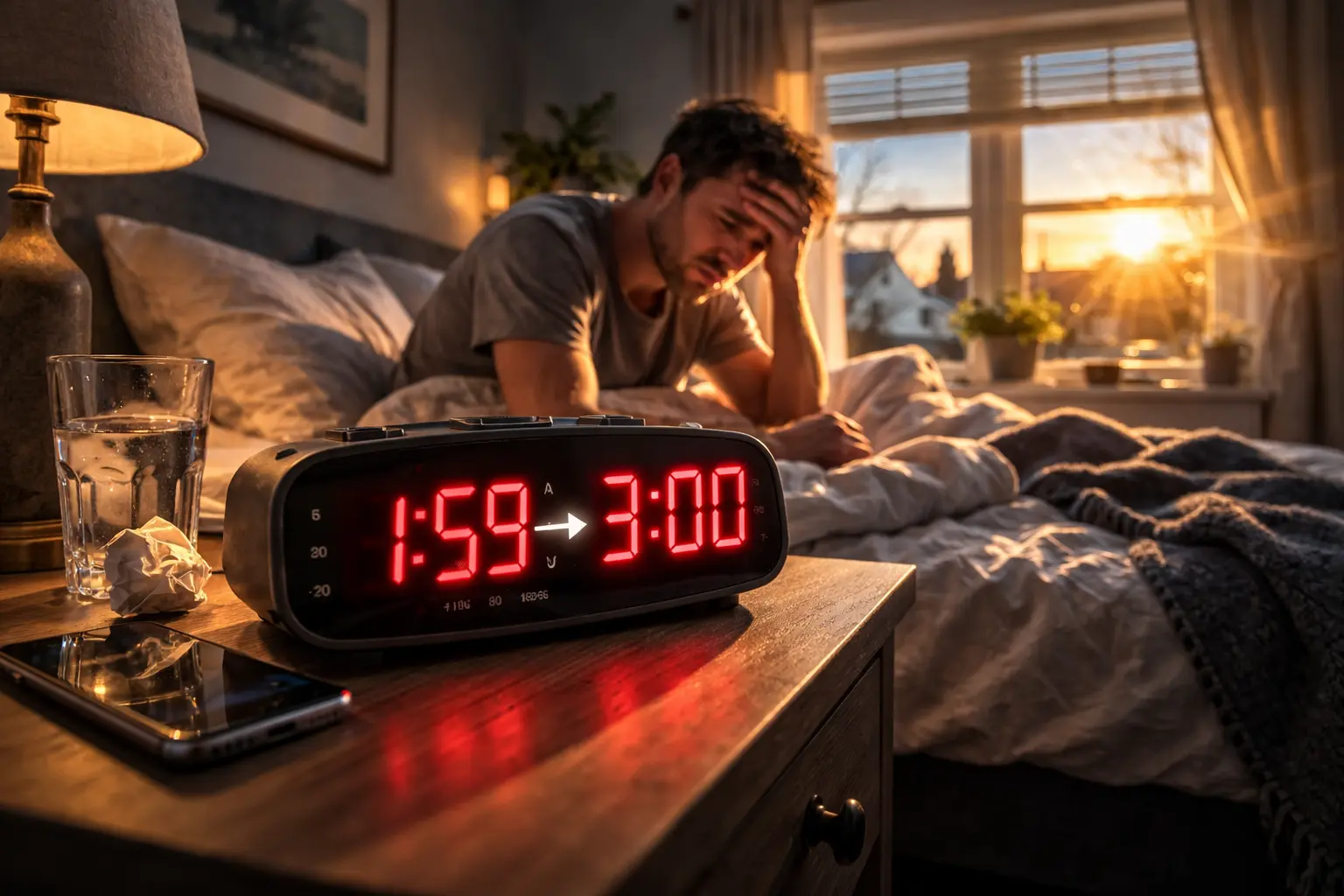
At 2 a.m. local time on March 8, clocks in most of the U.S. jump forward by one hour. That means one less hour of sleep overnight, with sunrise and sunset both arriving later by the clock. While the schedule changes instantly, the body’s internal timing system does not. (Time and Date)
The CDC says changes in light and time can disrupt the circadian system and shorten sleep after the switch to Daylight Saving Time. That matters because circadian rhythm helps regulate alertness, sleep timing and other key body functions. (CDC)
Why people often feel worse after “spring forward”
For many people, the spring transition feels like a mini jet-lag event. The lost hour can make waking up harder, especially when mornings suddenly get darker by the clock. According to the Associated Press, research has linked the spring transition with short-term increases in risks such as fatal car crashes, and experts say the sleep disruption can linger beyond just one rough morning. (AP News)
That is one reason the health debate around Daylight Saving Time has become stronger in recent years. The argument is no longer just about inconvenience or whether people prefer more evening sunlight. It is increasingly about sleep quality, daily functioning and whether the twice-yearly switch still makes sense in modern life.
Not every part of America changes its clocks
Most of the country will observe the time change, but not all of it. The U.S. Department of Transportation says Daylight Saving Time is not observed in Hawaii, American Samoa, Guam, the Northern Mariana Islands, Puerto Rico, the U.S. Virgin Islands, and most of Arizona.
That exception keeps the issue in the spotlight every year. If some parts of the country function without changing their clocks at all, many Americans naturally ask why everyone else still has to do it. (Department of Transportation)
America still cannot agree on the fix
Public frustration with changing the clocks is widespread, but there is still no national agreement on what should replace the current system. Some want permanent Daylight Saving Time because they like brighter evenings. Others support permanent standard time because sleep experts argue it is more aligned with human biology and morning light. AP reports that reform efforts have repeatedly stalled as lawmakers, industries and states disagree on the best path forward.
So for now, the system stays the same: spring forward in March, fall back in November. And each year, the same argument returns with it.
What to do before the switch
Experts generally recommend making the transition easier rather than trying to power through it. The CDC advises steps that support circadian adjustment, and AP highlights the value of morning light exposure and small routine changes to help the body adapt.
That may not make the lost hour feel any fairer, but it can make the first few days more manageable — especially for people who already struggle with sleep, early starts or fatigue.
The bigger question is not going away
Daylight Saving Time keeps trending because it affects something deeply personal: sleep. People may not follow transportation law or time-policy debates closely, but they know when their alarm feels harsher, their morning feels darker and their body feels out of sync.
And that is why this weekend’s clock change is bigger than a seasonal routine. On Sunday, March 8, 2026, America will lose an hour — but the real reason the story keeps returning is that many people feel the impact long after that single hour is gone.
SEO package
Meta title:
America Loses an Hour This Weekend — Why Daylight Saving Time Hits So Hard
Meta description:
The US clocks spring forward on March 8, 2026, and many Americans may feel the effects for days. Here’s why Daylight Saving Time disrupts sleep and keeps sparking debate.
Slug:us-daylight-saving-time-health-effects-2026
Suggested featured image prompt:
A realistic editorial-style image of a bedside digital clock changing from 1:59 a.m. to 3:00 a.m., with a tired person in soft early-morning light, natural shadows, emotional magazine-style composition, high detail, no text, no watermark.
Agar chaho, main ab isi ka UK-English tabloid polish ya WordPress HTML version de deta hoon.